
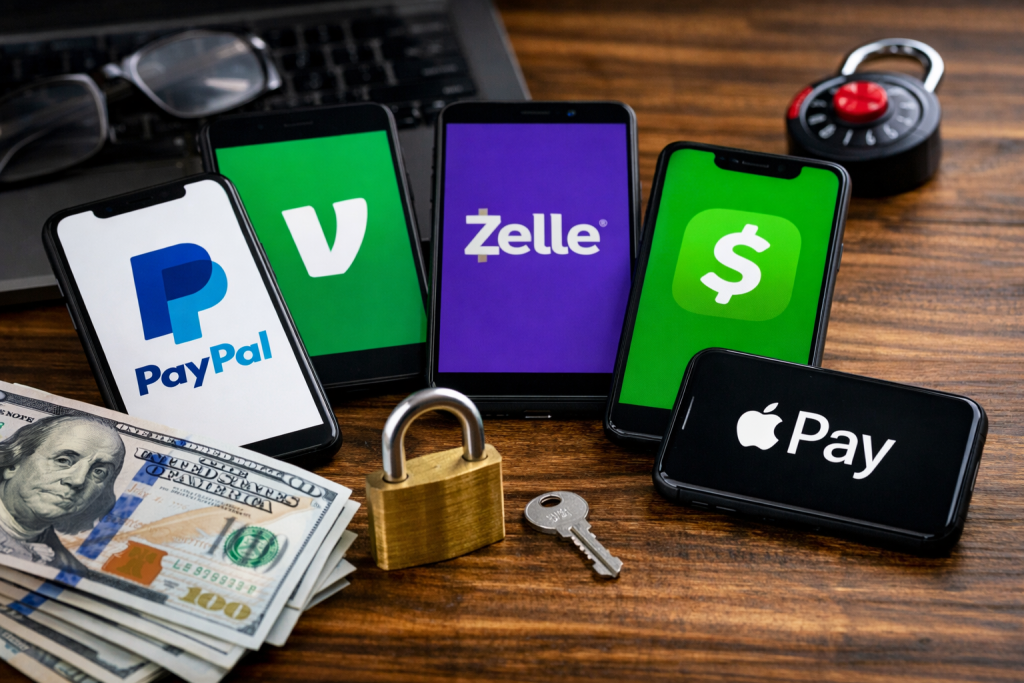
If you own rental property, operate a business, or invest in real estate, payment apps are no longer optional. They’re part of modern commerce. Tenants use them. Contractors request them. Vendors prefer them. Investors transfer funds with them.
But convenience without caution is expensive.
According to multiple national surveys, PayPal remains the most widely used payment platform, particularly among older Americans. Venmo and Cash App skew younger. Zelle is embedded inside most banking apps and heavily promoted by the banking industry. Apple Pay dominates within the Apple ecosystem.
The real question isn’t which app is “best.” It’s which one fits your risk tolerance and operating system.
Understanding the Risk
Payment apps are not regulated like credit cards. That matters.
Most apps will reimburse you for unauthorized transactions — meaning someone hacked your account. But if you were persuaded to send money to a scammer (what’s legally considered an “authorized” payment), recovery options shrink dramatically.
For real estate investors, this is especially dangerous in three scenarios:
-
Security deposit transfers
-
Contractor down payments
-
“Urgent” wiring instructions sent by email
Fraudsters know landlords move larger dollar amounts. That makes us targets.
Zelle is often considered more secure because it connects directly to your bank. Transfers happen quickly — sometimes within minutes. But speed cuts both ways. Once money is gone, it’s often gone for good.
Venmo and Cash App are convenient, but both charge fees for credit card payments and instant transfers. Venmo transactions are public by default unless you change privacy settings — something many users overlook.
Apple Pay earns high marks for privacy. Cash App scores well on safety. None of the major apps score especially well on transparency about how they use your data.
Best Practices for Property Owners
Here’s what I recommend to fellow investors:
1. Send money only to verified contacts.
Never rely on emailed payment instructions without verbal confirmation.
2. Use micropayments first.
Before sending $5,000 to a new contractor, send $1 and confirm receipt.
3. Turn on two-factor authentication.
Every app offers it. Use it.
4. Limit your platforms.
The more apps you use, the more accounts you must monitor. Idle accounts are prime targets.
5. Separate business from personal.
Use dedicated business accounts whenever possible. Cleaner accounting. Cleaner liability protection.
The Leadership Lesson
Scams succeed because they create urgency and emotion.
Great investors operate from clarity, not panic.
Before you send money, pause. Verify. Confirm.
That simple discipline can save thousands.
In business — as in football — protecting the ball wins games.